



How to choose the right downpipe for your engine?
We’ll use MQB as an example, but the same fundamentals apply to almost any car. You’re not buying “a pipe” — you’re buying sound, smell, inspection reality, and how well the setup survives backpressure + heat load.
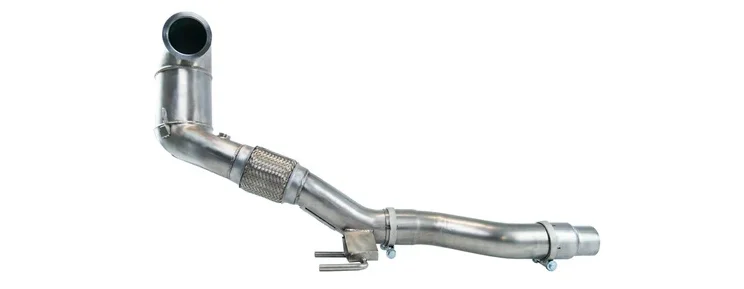
| Type | Best when | Sound |
|---|---|---|
| Catless | “I want flames and problems” | 💀 |
| 100 CPI | Big turbo / when backpressure is a real limiter | 🔥 |
| 200 CPI | Street + power, “best compromise” | ✅ |
| 200 DIY | Best value without the “brand tax” | ✅ |
Pro tip: if “200 CPI” is suspiciously cheap, it’s not a “great deal”. It’s a metal pipe with ‘200’ written on it.
Maximum noise, maximum flames. And maximum hassle.
If you love bangs and flames, you can’t melt a catalyst — because there isn’t one. Compared to a good race cat (100–200 CPI), the power difference is usually so small you won’t really feel it. You will feel (and smell) the noise and fumes.
Recommendation: since there’s no cat, brand doesn’t matter much for power. Buy the cheapest.
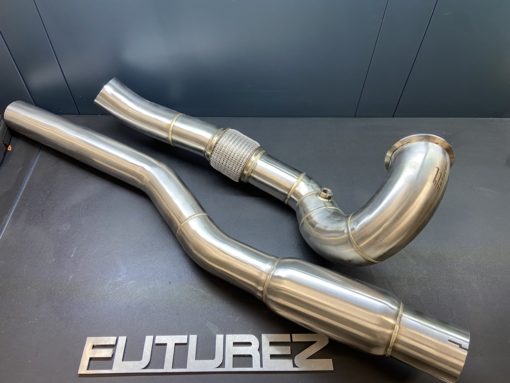
The freest-flowing race cat. Not a “sensible daily” choice.
100 CPI is basically maximum flow — usually only needed when backpressure becomes a real limiter
(typically around ~550 hp+ goals).
It’s a great option when you want maximum flow but you don’t want to choke on exhaust fumes at traffic lights.
The sound difference between 100 CPI and 200 CPI is often almost nonexistent, especially at higher boost.
Recommendation: Choose this only if your target is 500+ hp (EA888 Gen3/4). Otherwise it’s easy “unnecessary overkill”.
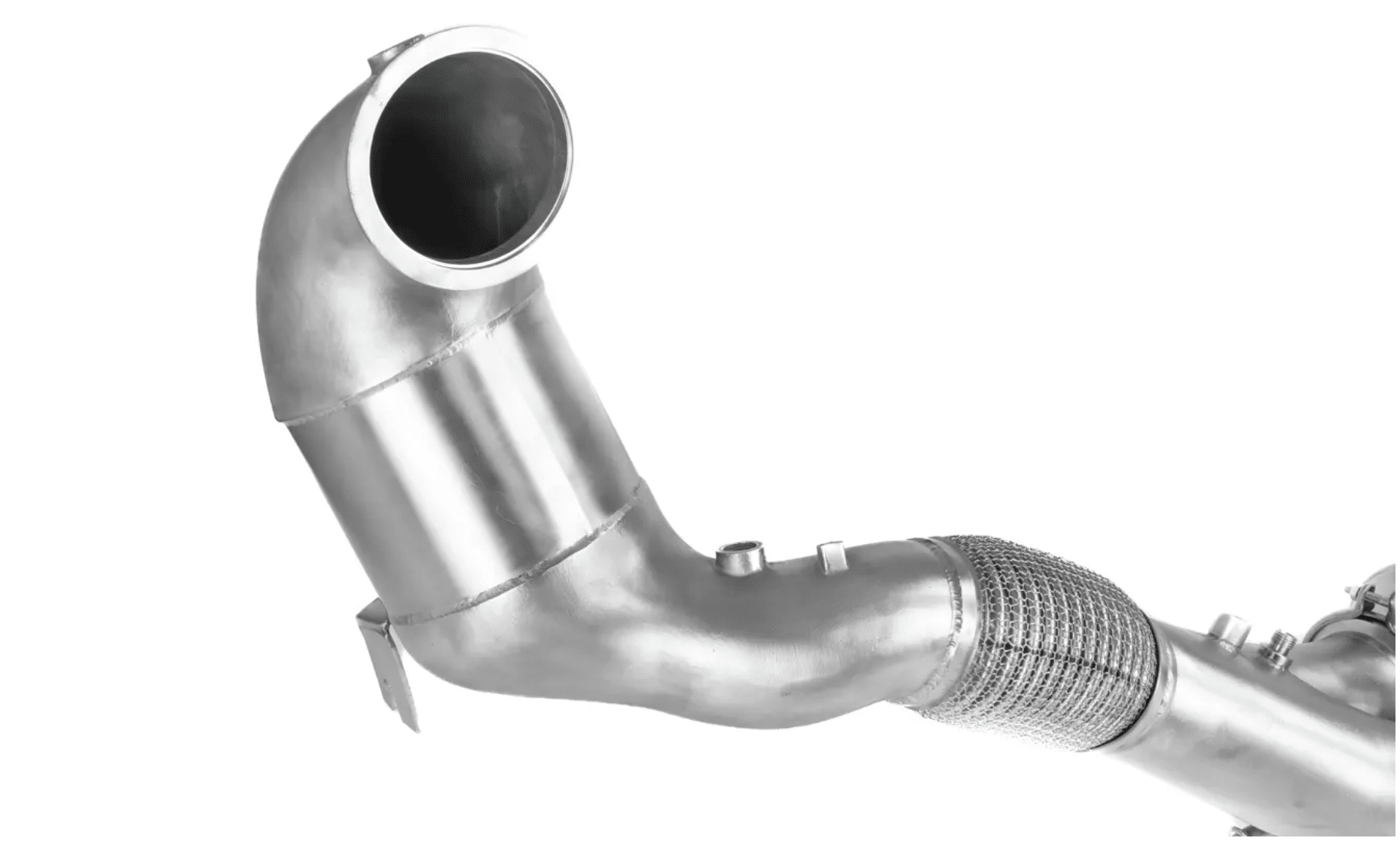
The most common choice — because it works.
When you hear “race cat”, it basically means this: 200 CPI. It’s the most common option on the market. It covers almost everyone’s real-world power goals — as long as the catalyst is high quality. Cheap cats are often the problem: they have little or no precious metals. Good units (e.g. HJS) contain enough, so you get both flow and proper filtering. With HJS you also often get type-approval paperwork (ECE).
An ECE-approved HJS will practically always pass emissions (assuming the car is otherwise healthy). A quality cat often passes values too, but without official paperwork.
NOTE: cheaper brands like CTS Turbo, QT Parts etc. often use cores that lack the necessary precious metals, so in practice they won’t meet emissions even if the car is otherwise fine.
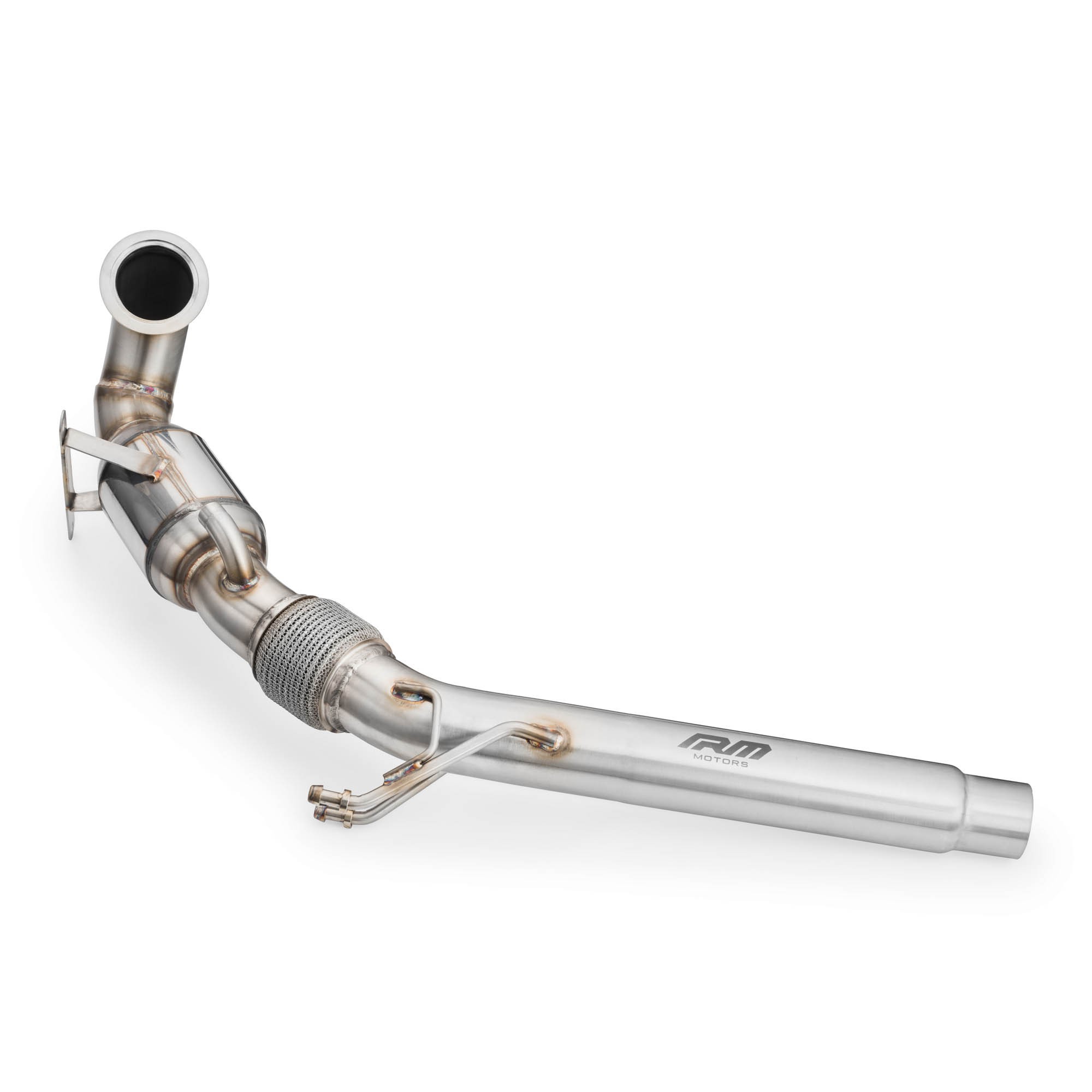
Rare. And used ones are often a gamble.
You don’t really see these anymore. APR used this core type the most. APR no longer makes downpipes due to US EPA pressure, and used ones are often so heat-cycled and worn that readiness / inspection readiness can be a coin flip — even if paperwork exists.
If you’re not paying the brand tax, do it properly.
Above we only talked about complete downpipe packages. For the DIY type, a very effective option is welding a separate 200 CPI race cat in place yourself, or having that section built by an exhaust shop. EU-made cores can be excellent quality if you stick with real manufacturers. ECE stamps are typically mainly from HJS, but even without ECE, many cores are genuinely high performance.
Flow: pay attention to the first ~30 cm after the turbo — especially the first bend. On some pipes (like stock) the restriction can be right at the beginning even if the cat itself flows well.
Tune & check engine light: if the cat changes but the tune is stock, the ECU may interpret it as a fault → CEL / OBD codes. An O2 spacer can sometimes “trick” the sensor, but the smarter solution is to tune it properly.
Short disclaimer: this is not legal advice — it’s an enthusiast’s view on downpipes. Laws and inspection practices can change, so always verify current requirements separately.