evolcrewapprovalevolcrew blackevolcrewapprovalevolcrewapproval
✕

FUELING

WITHOUT APPROVAL · MQB GUIDE

MQB EA888 Gen3 Fueling Guide

When power goes up, the amount of “stuff” you need to feed the engine goes up too. Air is “free” — fuel isn’t. The MQB EA888 Gen3 uses direct injection (DI), and in many cases also port injection (MPI). The good news: the system is modern and adapts well. The bad news: ethanol blends + hot weather + a bigger turbo can eat capacity fast — and when that happens, you don’t lose on the dyno… you lose on the pull.

In short: Pump gas = most headroom, least knock resistance. E-mix/E85 = more power, but requires more fuel volume. When the “headroom” is gone, the car doesn’t “just run lean” — the ECU intervenes: pressure drops, torque is cut, timing changes, and the tune becomes a ticking time bomb.

On Gen4 engines the factory pumps are already stronger, and ~500 hp is typically achievable without issues even on ethanol. So this guide focuses on Gen3. On Gen4, MPI usually becomes relevant mainly when pushing beyond ~500 hp.

Basics Limits & symptoms E30–E85 in practice Upgrade paths Street / Drag / Track Futurez parts Checklist
 
What increases fuel demand
Air + Ethanol + Heat
More boost = more air = more fuel. Ethanol needs more volume. Heat/track use increases demand further.
Gen3 / FINLAND ADVANTAGE
MPI is often already there
On many cars MPI exists from the factory — but many tunes don’t properly use it at WOT until it’s enabled and calibrated.
Typical “why doesn’t it pull?”
Pressure drops
LPFP can’t keep up / HPFP falls behind / DI duty maxed → ECU starts protecting: lambda, timing, torque requests, pressure.
 

How MQB EA888 Gen3 fueling works (DI + MPI)

MQB basically calculates fuel demand from “how much air goes into the engine” → and injects accordingly. Gen3 uses DI injectors (into the cylinder) and MPI injectors (into the intake manifold). In stock and mild setups, MPI is often mostly for part-throttle / emissions, but under high load the physical limits of the DI system show up.
Go to limits →
 
Fueling chain (in real life)
LPFP
In-tank pump / low pressure
Feeds the system. When it starts to fall behind, everything upstream starves.
HPFP
High-pressure pump / DI
Cam-driven pump raising pressure for DI. Most commonly struggles around peak torque.
DI + MPI
Injectors & injection window
DI injection “window” shrinks with RPM → duty hits the limit. MPI helps when it is properly enabled at WOT.
ECU / Tune
The thing that decides what happens
Without calibration, hardware doesn’t help. Flex fuel, MPI at WOT, pressure curves, injector models — it all lives in the tune.
Core idea: more air requires more fuel. If you can’t deliver it consistently, the ECU starts saving the engine. That feels like “won’t pull”, “falls off up top”, or “random cut/hesitation on a pull”.
 

Limits & symptoms (how you know fueling is running out)

MQB usually doesn’t “blow up immediately” — it tries to compensate first. That’s why many think everything is fine, until you get a weird cut on a pull, power dies at high RPM, or logs show everything dipping.

 
LPFP limit (low pressure)
  • On a pull, LPFP pressure drops / oscillates → HPFP doesn’t get stable feed.
  • At high RPM it “falls flat” even if boost is still requested.
  • Hot weather / long pulls make it worse (heat + demand).
HPFP limit (high pressure)
  • Rail pressure drops especially around peak torque.
  • Feels like “cuts for a moment” or “doesn’t pull properly”.
  • Ethanol makes it worse (needs more fuel volume).
DI injector limit
  • At higher RPM the injection window shrinks → duty maxes out.
  • If pressure drops, the ECU increases on-time → the limit arrives sooner.
  • MPI is the спасатель — when it’s actually used under load.
No logs = guessing. If you want to do this right, monitor at least: LPFP pressure requested/actual, HPFP pressure requested/actual, lambda target vs actual, DI injector duty, IAT, and knock/ignition corrections.
 

E30–E85: why it makes the car faster

Ethanol increases knock resistance → you can run more timing/boost more safely. But it’s not free: ethanol requires more fuel volume for the same power. That’s why many can run “E20 fine” but “E85 starts running out”.
Go to upgrade paths →
 
E10 / pump gas
Most fueling headroom
Lowest fuel demand, but knock arrives sooner → the tune can’t “give everything”.
E30–E50
Sweet spot for many
Great knock protection + manageable consumption. Still: “do HPFP/LPFP keep up?” must be verified.
E70–E85
Fast — if fueling keeps up
Maximum potential, but usually needs at least LPFP + proper HPFP/MPI setup and calibration.
FlexFuel / ethanol %: the #1 “why it breaks / why it doesn’t work” factor
If you run blends, ethanol percentage must be known and used in the tune logic (or you run one assumption and pray). A FlexFuel setup (sensor + harness + injectors + tune) makes it controllable: the ECU knows what’s in the tank and adjusts accordingly.
 

Upgrade paths (pump gas → ethanol blend)

The same build can be totally fine on pump gas, and “right on the limit” on ethanol with the same boost target. Read each path top-to-bottom: pump gas first, then ethanol.

 
STOCK TURBO
Daily / basic Stage 1–2 / occasional pulls
 
PUMP GAS / 98
Usually: no hardware upgrades needed.
 
E-BLEND (E20)
E20: on aggressive tunes the HPFP can already be “right on the limit”. Generally still fine on stock hardware.
Risk area: peak torque → rail pressure drop shows up here first.
When HPFP? As soon as you want to run more than E20. At that point it’s smart to upgrade MPI injectors to ~980cc (often called 1000cc) as well.
STAGE 3
This is where the game gets serious
 
PUMP GAS / 98
Typical recipe: an HPFP upgrade usually covers you up to ~470 hp.
When LPFP? Usually once you push ~480+ and higher boost. You’ll see it quickly in logs if, at high RPM, low-side pressure starts falling below ~4 bar.
 
E85
Required: HPFP + larger MPI injectors + proper calibration.
LPFP: often needed already around ~430 hp.
PM4: around ~500 hp even an upgraded in-tank Walbro pump often needs a controller to run properly at full output.
Ethanol sensor: at this level, strongly recommended so you can safely use ethanol-dependent boost/timing and keep runs repeatable.
 
HPFP (high pressure)
IE HPFP (EA888 Gen3)
IE HPFP upgrade (Futurez)

Increases HPFP capacity and helps especially with rail pressure drop around peak torque. Typically upgraded when targeting ~450 hp+ on pump gas, or when you want to run ethanol blends safely. In practice it’s a smart buy at the same time you upgrade the turbo.

View product →
LPFP (low pressure)
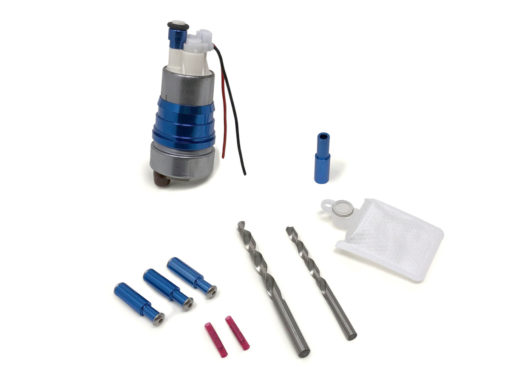
Precision Raceworks LPFP (Walbro 535)
Precision Raceworks LPFP (placeholder)

When ethanol and higher power start starving the low side, this is the “safe default” upgrade. It improves repeatability: pressure stays stable, HPFP gets fed, and the car doesn’t die up top. Rarely needed on a stock turbo regardless of ethanol content.

View product →
Controller
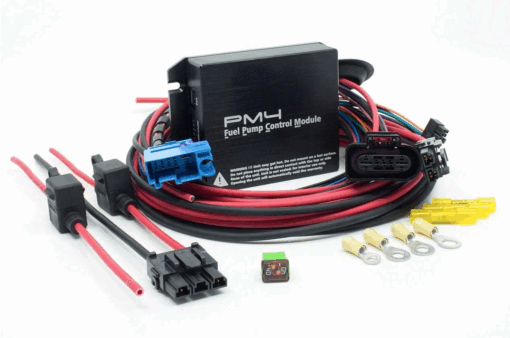
Torqbyte PM4 controller (MQB)
Torqbyte PM4 (placeholder)

Once you upgrade the LPFP and start pushing hard (Stage 3/4, E85), control and load go up. PM4 helps run the pump properly and consistently. With the stock controller, people often have to limit output to keep the system “clean”.

View product →
FlexFuel
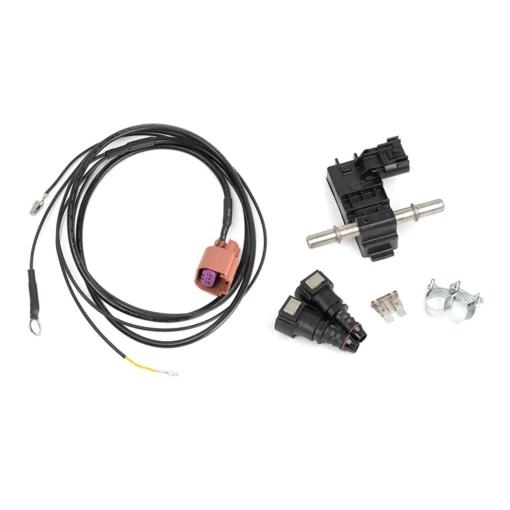
MQB EA888.3 FlexFuel kit
FlexFuel kit (placeholder)

If you mix E85, this makes it actually controllable. The sensor reports ethanol content and the tune uses it. In practice: less guessing, more consistency, better protection from “different fill-up → different blend”. A software change is required — the sensor must be enabled and calibrated in the ECU.

View product →
MPI
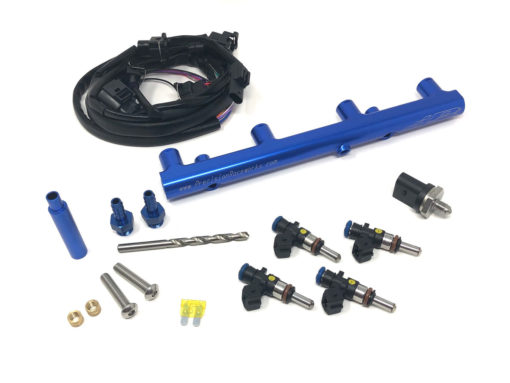
Precision Raceworks MPI kit (EA888.3)
Precision MPI kit (Futurez)

MPI is often already installed from the factory — but if you want more capacity (especially on ethanol and hybrids), larger MPI injectors + proper WOT usage is the “game changes” moment. Important: MPI at WOT requires tuning (it’s not automatically “always active”).

View product →
Installation
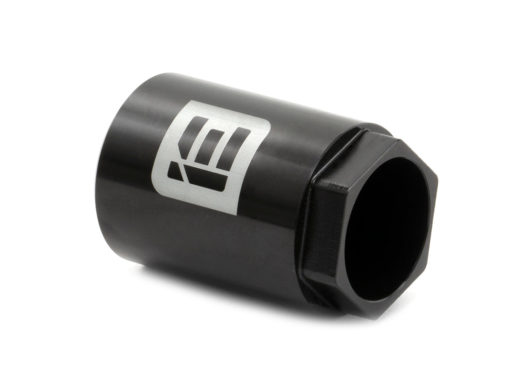
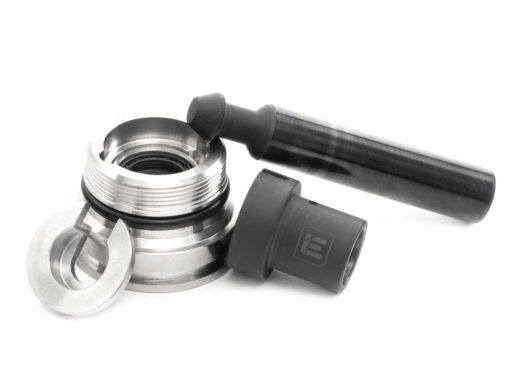
IE HPFP upgrade assembly tool
IE assembly tool (Futurez)

HPFP disassembly/reassembly is not where you “force it”. The right tool reduces hassle and lowers the risk of damaging parts.

View product →
Important: getting the value from these parts requires proper calibration. FlexFuel especially is not “plug & play = more power”. Hardware enables — tuning makes it safe.
 
Instagram || YouTube || Forum